GUM – Glamorous Damage

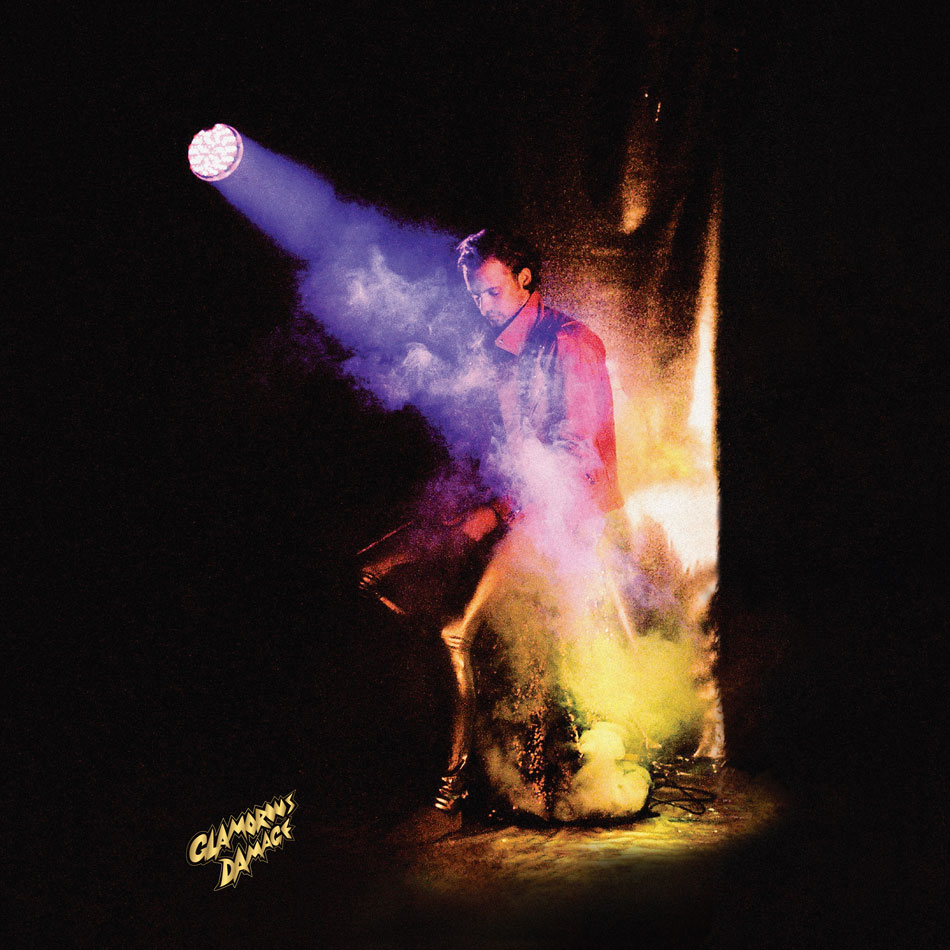
Release date: November 13th 2015
Label: Spinning Top Music (AU) /
Length: 49 minutes
7.0
A Retro-Futurist Glow
GUM is the solo project of Australien multi-instrumentalist, producer and songwriter Jay Watson. This Jack-of-alll-trades is best known for his collaborations with Aussie bands such as Tame Impala – as a touring and recording member alongside Kevin Parker’s project plus cowriter for singles like “Elephant” – but also as the co-founder of psychedelic rock band Pond. Conmfortable with both the keyboards, guitars, bass, drums… Watson started a solo project in 2014 with old recorded materials from 2011. With his GUM solo project – from a shortened nickname – the artist released his first album Delorean Highway which received a positive reception in particular in Australia.
Few months after the realease of this first LP, Watson started to record his second solo album in London. Thirsteen tracks – Glamorous Damage – were produced and released on November 13th 2015.
Let’s dive into this album full of retro electronic textures, synths and drifting arrangements at the crossing of psychedelic and 8-bit music.

A short intro snippet – “G.U.M” – functions almost like a theme or concept seed for the record. It’s not a full song so much as a tonal overture — a quick hit of synth textures, sampled voice and glitchy electronics that sets up the retro-futuristic palette and 80’s sci-fi vibes the album uses throughout. It feels like pressing start on an old arcade machine that’s been warped through decades. Production here is minimal and serves as a brain cleaner before the first full track.
The first track “Anesthetized Lesson” is the lead single and perhaps one of the album’s most immediately catchy moment. A funk-inflected groove with retro synth bass and spacey melodies, it showcases Watson’s love of glitchy electro and catchy hooks. This is where his synth pop really starts to bloom. The production is based on crisp synths with a strong low-end groove; vocals processed with delay and reverb when lyrics are more about feeling over narrative — part of Watson’s approach to lyric writing. The song gives some very similar vibes than the “America’s Cup” track from Pond but with lower tempo and Nick Allbrook’s voice.
“Glamorous Damage”, the title track isn’t a typical verse/chorus song, more an interlude. There’s a spoken sample about synthesizers and machines — literally grounding the album in its electronic, futuristic tones while giving a self-reflection of the album’s themes and risks. With an experimental production, this track is less about melody than about world-building.
The interlude is followed by “Notorious Gold”, one of the most melodic tracks, blending psychedelia and psych-pop echoes. Production is rich of synth layers and the song possesses a more tradional structure. Saturated guitars were borrowed to Kevin Parker while singing gives some Pond or MGMT vibes. Lyrically it touches on aging fears and identity — a mix of personal reflection and abstract imagery, tapping into a fear of “growing old too fast”.
“Elafonissi Blue” is a synth funk track named after a place Watson visited. More groovy and atmospheric oriented and multiple layers, the song is constructed around numerous shimmering and energic pads. Sonically it’s bright and danceable with swirling electronics. This track leans into fun and groove more than introspection.
Addiction to screens: here is the topic covered by Watson. With a self explaining title, “Television Sick” plays with warped vocal fragments, suggesting a statement on media and saturation. The production intertwines glitch and guitar licks for a slightly edgier feel. The song is short , punchy and perfectly succeeds giving this impression of 80’s TV show opening.
“New Eyes” is a slower, more immersive journey, with distorted guitar lines and mystic synth layers. This track gives the album breathing space, leaning into mood and dreaminess before jumping toward the second half of the record. In contrast, “R.Y.K” is a groove-centered piece that resurrects a rhythmic motif first teased in the opener. It is one of the album’s more experimental arrangements — synth lines weave in and out and Watson’s vocals ride the beat rather than dominate it. Arrangements are loopy and hypno giving this experimental feeling alongside futuristic bass.
Next track is a standout cinematic moment that blends retro organ tones and space-age synths for a more dramatic feeling. The track embodies its title – “Science Fiction” — picking up speed like a rocket at mid-song. Lyrically, it’s romantic: “I thought that love was science fiction / Until I saw you today”” — as Watson choses science fiction as a metaphor for the unreal becoming real.
The next track, “Ancients”, is another synth-rich piece but with a sense of nostalgia and melody that feels slightly softer. It reflects the album’s ability to balance high-energy tracks with introspective moments. Smooth synth pads and washed-out textures gives this particulare melodic and gentle pacing. The song is very catchy with an intriguing music video and low-cost CGI though not without recalling Pond “Paint Me Silver” or “Sitting Up On Our Crane” – greetings to the Kamehameha sequence perfectly rythemed at 3:15.
“Greens and Blues” is a weaker, airy and reflective, with understated vocals and repetitive structures. This song is bringing a meditative touch to the record while the next – “She Never Made It to Tell” – turns the album a bit duller, with complex melodies and an almost surreal feel. The voice’s tone, less pop structured creates a bridge with reverie and a much darker end of record.
The album closes on a quiet, place-inspired short track named after Watson’s hometown: “Carnarvon“. It feels like an afterglow, atmospheric and nostalgic, tying the whole record back to earthly grounding after the cosmic journey – the landing of the space shuttle. The cinematographic, ambient atmosphere echoing the commitment of the opener acts as a “back-to-normal” track.
The take away
Glamorous Damage commits fully to its retro-futurist synth aesthetic (’80s synth-pop, glam, psych, sci-fi textures). Production is consistent and authentic with no chase of trends, making the album feel like a single world rather than a loose collection of songs. Jay Watson’s self-production shines: rich synth layering, tasteful effects, and polished mixing. Guitars, synths, and vocals often blur together, creating a distinctive, immersive texture. Many tracks reward repeted and careful listening due to subtle details and evolving arrangements. Some songs like “Anesthetized Lesson”, “Notorious Gold” and “Elafonissi Blue” deliver strong hooks and danceable rhythms with sometimes funk-influenced basslines. Even when lyrics are abstract, the album communicates emotion through tone, pacing, and texture while the intro/interlude tracks help frame the record as a journey.
On the other hand, as any songs rely on abstract imagery rather than clear narratives, this may leave listeners wanting deeper or more direct meaning. Vocals are here often treated as another instrument, making lyrical content easy to overlook. The album has a few misses, where tracks blur together or lack standout moments. Some interludes and slower songs can interrupt momentum if you are re expecting constant energy. While cohesive, the album sticks tightly to its synth-heavy palette and this could lead audience who may desire genre shifts, disruptive moments or big dynamic surprises to find the record a bit samey by the end.
Enjoy!
Standing out
– Anesthetized Lesson
– Elafonissi Blue
– Television Slick
– The Ancients